Monday, 25 November 2019


Write  an essay  of  300  words

1. Attempt a critical appreciation of John Donne’s A Valediction Forbidding?
A Valediction  Forbidding  Mourning Mourning is one of the better-known poems of Donne for its conceit of the compass. It is a typical metaphysical poem which was addressed to the poet’s wife. It was written on the occasion of the poet’s departure for France with Sir Robert  Drury.

The poem expresses Donne’s positive attitude towards love. The basic theme of the poem is the union of true lovers even when they are physically separated. The poet piles up  a number of arguments to  prove the point, and thus he persuades his beloved not to grieve at the time of his departure for  France. Donne says to his wife that like the virtuous people, let them  also accept their separation quietly with no tears or sighs.

 Donne is poking fun at the idea that tears would cause a flood, or turbulence of deep sigh is sufficient to let lose a tempest. The poet says that their love is something spiritual and so the physical separation that they endure is not be dreaded. Only the earthly love will break and cracks when there is separation. Their love fined that it is not dependent on physical sensation.

The poet further says that love has fused their two souls into one. Therefore, even if he has to go away, their souls would not be separated.  His absence would not cause any breach of in their love. Rather, his going away,  only means that their love would cover a larger area, just as gold,  when beaten,  does not break but expands wider and wider.

Metaphysical means which is beyond physical - the immortal soul and the existence of a supreme being. Donne employs the famous metaphysical conceit of the compass to prove the nature of their love. They are like the two legs of a compass. She is like the fixed foot of the compass which remains fixed at the center. But it leans and follows the other foot when it moves, and grows erect and unites with the moving foot when it returns to the starting point after completing the circle. Similarly, it is the firmness of her love that enables him to complete his journey successfully and then return home.

The poem is a typical metaphysical poem with its brilliant use of an array of poetic techniques such as metaphor,  paradox, simile,  conceit,  alliteration, and rhyme scheme, with objects and ideas drawn from a wide spectrum of knowledge, life astronomy, metallurgy, geology, and geometry.
POEM

A Valediction: Forbidding Mourning

As virtuous men pass mildly away,
   And whisper to their souls to go,
Whilst some of their sad friends do say
   The breath goes now, and some say, No:

So let us melt, and make no noise,
   No tear-floods, nor sigh-tempests move;
'Twere profanation of our joys
   To tell the laity our love.

Moving of th' earth brings harms and fears,
   Men reckon what it did, and meant;
But trepidation of the spheres,
   Though greater far, is innocent.

Dull sublunary lovers' love
   (Whose soul is sense) cannot admit
Absence, because it doth remove
   Those things which elemented it.

But we by a love so much refined,
   That our selves know not what it is,
Inter-assured of the mind,
   Care less, eyes, lips, and hands to miss.

Our two souls therefore, which are one,
   Though I must go, endure not yet
A breach, but an expansion,
   Like gold to airy thinness beat.

If they be two, they are two so
   As stiff twin compasses are two;
Thy soul, the fixed foot, makes no show
   To move, but doth, if the other do.

And though it in the center sit,
   Yet when the other far doth roam,
It leans and hearkens after it,
   And grows erect, as that comes home.

Such wilt thou be to me, who must,
   Like th' other foot, obliquely run;
Thy firmness makes my circle just,
   And makes me end where I begun.

Monday, 12 March 2018

CLAIMING AN EDUCATION
ADRIENNE RICH

Introduction
Adrienne Cecile Rich (May 16, 1929 – March 27, 2012), the renowned poet, essayist and political activist who famously defined herself as a “woman,lesbian and feminist”,  was born in Baltimore, the USA in 1929. In the final year of graduation, she won the prestigious Yale series of Younger Poets Award for her book A Change of world in 1951. Her second collection of poetry entitled The Diamond Cutters in 1955. In the tumultuous 1960s, she became a great champion of the oppressed by standing for the rights of women and the sexual minorities, besides her participation in civil rights moment and anti-Vietnam War protests. She was called "one of the most widely read and influential poets of the second half of the 20th century",and was credited with bringing "the oppression of women and lesbians to the forefront of poetic discourse." Her works Snapshots of a Daughter-in-Law (1963) and Leaflets (1969) were testimonies of her politics. Rich won the 1974 National Book Award, for  Diving in to the Wreck (1973), one of her most celebrated collections consisting of angry exploratory poems. The questioning of patriarchal assumptions, the need for change and the power of the will were the themes in her early writings until the publication of The Dream of a Common Language (1978) which argues for a common women's language, a concern of most feminists all over the globe in the 1970s. Due to her differences with the policies of the US government and President Clinton, she refused to accept the prestigious National Medal for the Arts in 1997. She died on 27th March, 2012 at the age of eighty two.
Her political belief is best manifested in her comment: “All human life on the planet is born of woman, the one unifying, incontrovertible experience shared by all women and men is that months- long period we spent unfolding inside a woman's body.”  the speech, titled “Claiming an education,” was first printed in the magazine The Common Woman in 1977 and eventually reprinted in the collection On Lies, Secrets, and Silence: Selected Prose 1966-1978.

Summary
In Adrienne Rich's essay, She speaks to a group of female students at Douglass college,USA. She starts out by saying that University education implies an ethical and intellectual contract between teacher and student. Although it is unwritten one must look onto it because you cannot afford to think of being here to receive an education, you will do much better to think of yourselves as being here to claim one.  The difference is that between acting and being acted-upon. So take responsibility toward yourselves. Responsibility to yourself means refusing to let others do your thinking, talking, and naming for you; it means learning to respect and use your own brains and instincts; hence, grappling with hard work. And don't fall for shallow and easy solutions-predigested books and ideas, weekend encounters guaranteed to change your life, taking "gut" courses instead of ones you know will challenge you, bluffing at school and life instead of doing solid work. She emphasis that in case of women the matter is of life and death. She believes that the most devastating weakness in education is the exclusion of women in the academic community. Although nowadays we see an increasing number of women in universities, there are still very few of those institutions that women take part of as faculty.
It means that we insist on a life of meaningful work, insist that work be as meaningful as love and friendship in our lives. The courage to be "different." The difference between a life lived actively, and a life of passive drifting and dispersal of energies, is an immense difference. Clear thinking, active discussion, and excellent writing are all necessary for intellectual freedom, and that these require hard work. This means seeking out criticism, recognizing that the most affirming thing anyone can do for Rich claims that everything one learns reflects how men have perceived history and experiences.

EXERCISES
I. Answer the following questions:
1. In which collection was ''Claiming an education'' included?
a. The Dream of a Common Language           b. On Lies, Secrets,and Silence
c. Leaflets                                                        d. None of These
Ans: b. On Lies, Secrets,and Silence
2. In which college did Adrienne Rich deliver the speech entitled '' Claiming an Education ''?
Ans: Douglass College, New Jersey, USA.
3. who was the author of Jane Eyre?
Ans: Charlotte Bronte
4. who stated that ' Women's  apprehension is quicker than that of men, but their defect lies for the must part in the logical faculty and in the higher mental activities'?
Ans: Elizabeth Barret Browning

II. Answer the following questions in a sentence or two:
1. How did Adrienne Rich plan to separate her remarks into two parts?
Adrienne Rich planned to separate her remarks into two parts by saying some thoughts about women students and some thoughts about teachers, who teach in a women's college. But both are indivisible. That there is an "ethical and intellectual" contract between a student and their professor.

2. Mention one of the devastating weaknesses of the university learning, according to Rich.
According to Rich, one of the devastating weaknesses of the university learning has been its almost total ensure of women's experience and thought from the curriculum, and its exclusion of women as members of the academic community.

3. What is the difference between to claim an education and to receive an education?
The difference between to claim an education and to receive an education is that one is acting and another is being acted-upon, and for women it can literally mean the difference between life and death.

4. Why did the women students and teachers demand for the introduction of women's studies courses?
The women students and teachers demand for the introduction of women's studies courses to claim a women-directed education.

5. How does Adrienne Rich define 'taking responsibility towards yourselves', from the feminists perspective?
Responsibility to yourself means refusing to let others do your thinking, talking, and naming for you; it means learning to respect and use your own brains and instincts; hence, grappling with hard work.

6. How did Elizabeth Barret Browning express her impatience with studies?
Elizabeth Barret Browning express her impatience with studies by writing against the 'passive recipiency' in the mind. She said that women want to be made to think actively because their ability to understand is quicker than that of men, but their defect lies for the most part in the logical faculty and in the higher mental activities.

7. What, according to Rich, is the courage to be 'different'?
According to Rich, is the courage to be 'different', means women should be able to demand from others- parents, friends,roommates,teachers, lovers, husband and children to respect their sense of purpose and their integrity as persons.

8. What, according to Rich, is the second part of the contract?
The second part of the contract is that in a women's college the students have the right to expect their faculty to take them seriously because many male professors still feel that teaching in a women's college is a second-rate career.

9. What are the necessary ingredients of intellectual freedom?
Clear thinking, active discussion, and excellent writing are all necessary for intellectual
freedom, and that these require hard work.

10. What does Adrienne Rich mean by 'students demand to be taken seriously' ?
Women's students demand to be taken seriously' , because they also have the inborn potentialities so the teachers must be committed  to the belief that women's minds and experiences are basically valuable and unavoidable to any civilization worthy the name.

III. Answer the following questions in a paragraph:
1. Adrienne Rich's prose style in “Claiming An Education”?
In Adrienne Rich's essay 'claiming an education', the author speaks of the female experience against the backdrop of the male- dominated 'mainstream' academia. Although this essay was written in 1979, her points seems timeless. The work considered confrontational, argumentative and oratorical, this prose works have a oratorical style with didactic in tone. The entire work has a long sentences and very few simple sentences. Her language has a strong feminist touch and denouncing patriarchy in terms. She even coined some new terminologies like 'passive recipiency' ,' group therapy'.

2. The gendered bias in education, according to Adrienne Rich?
Adrienne Rich says that there is a lot of gendered bias in education because men had perceived and organized in their experience, their history, their social relationships, good and evil,etc.that is what taught in colleges. Even science can be racist and sexist. Some time male professors feel that teaching in a women's college is a second-rate career. It is only within the last 100 years that higher education has been opened to up to women. The books we study have names like 'The Descent of Man', 'Man and His Symbols', 'The Future of Man', 'Man and Machine' etc. these books pretending to describe a human reality that does not include over one-half the human species.

3. How does Adrienne Rich elaborate the concept of responsibility to oneself ?
Adrienne Rich elaborate the concept of responsibility to oneself, by saying that one should refuse to let others to do your thinking, talking, and naming for you; it means learning to respect yourself and use your own brains and instincts; hence, grappling with hard work. And don't fall for shallow and easy solutions-predigested books and ideas, weekend encounters guaranteed to change your life, taking "gut" courses instead of ones you know will challenge you, bluffing at school and life instead of doing solid work. Have the courage to be 'different', which means women should be able to demand from others- parents, friends,roommates,teachers, lovers, husband and children to respect their sense of purpose and their integrity as persons. Don't sit in passive silence even when you disagree inwardly with everything that is being said around you.

4. What should be the contract between the students and faculty?
Adrienne Rich starts her essay by saying that University education implies an ethical and intellectual contract between teacher and student. Although it is unwritten one must look onto it because you cannot afford to think of being here to receive an education, you will do much better to think of yourselves as being here to claim one. And she describes the contract between professor and student is like a "pledge of mutual seriousness". The professors should take them seriously because they also have the inborn potentialities so the teachers must be committed  to the belief that women's minds and experiences are basically valuable and unavoidable to any civilization worthy the name.

IV. Answer the following questions in about 300 words:
1. “Claiming An Education” is a  critique of the present system of education from a woman's perspective. Discuss?
In Adrienne Rich's essay, "Claiming an Education", the author speaks of the female experience against the backdrop of the male-dominated "mainstream" academia of Western thought. Although this essay was written in 1979, many of Rich's points seem timeless. She starts out by saying that University education implies an ethical and intellectual contract between teacher and student. Although it is unwritten one must look onto it because you cannot afford to think of being here to receive an education, you will do much better to think of yourselves as being here to claim one.  The difference is that between acting and being acted-upon.
Perhaps the most meaningful was the advice to "take responsibility towards yourselves". Adrienne Rich elaborate the concept of responsibility to oneself, by saying that one should refuse to let others to do your thinking, talking, and naming for you; it means learning to respect yourself and use your own brains and instincts; hence, grappling with hard work. And don't fall for shallow and easy solutions-predigested books and ideas, weekend encounters guaranteed to change your life, taking "gut" courses instead of ones you know will challenge you, bluffing at school and life instead of doing solid work. Have the courage to be 'different', which means women should be able to demand from others- parents, friends,roommates,teachers, lovers, husband and children to respect their sense of purpose and their integrity as persons. Don't sit in passive silence even when you disagree inwardly with everything that is being said around you.
Women's students demand to be taken seriously' , because they also have the inborn potentialities so the teachers must be committed  to the belief that women's minds and experiences are basically valuable and unavoidable to any civilization worthy the name. Clear thinking, active discussion, and excellent writing are all necessary for intellectual freedom, and that these require hard work. This means seeking out criticism, recognizing that the most affirming thing anyone can do for Rich claims that everything one learns reflects how men have perceived history and experiences.

2. Critically evaluate Adrienne Rich's concept of education?
The fundamental principle in Adrienne Rich’s article is that women, as students should not receive an education, but to claim one. Claiming an education sounds a lot like taking what’s rightfully yours. Do you receive an education for society or does society present it for a student to take? Rich seems to think that education is presented for those willing to claim it. She powerfully says that “The first thing I want to say to you who are students, is that you cannot afford to think of being here to receive an education; you will do much better to think of yourselves as being here to claim one.”
Rich explains that even all women colleges are ran by men. This seems interesting because Rich is encouraging women to claim their education.
Claiming something from my perspective means to take and not look back. Receiving means that someone may have to given something they have away. If women were teachers and administrators, women would feel better about receiving an education from another woman. But unfortunately very few women are working in administration field. Rich’s argument is summed up when she informs the reader that the idea of claiming an education can be embraced by any sex, race, color or creed. Rich instruct that take responsibility to yourself and refusing to let others do your thinking, talking and naming for you; so you will learning to respect and use your own brains and instincts; hence, grappling with hard work.
She says that education is not for everyone but it is there for the ones willing to take it. Rich provokes her reader by letting telling them to discover their own journey to education. She finally says to the women student that they should not sell their talents and aspirations cheaply. They should have the courage to demand from others to respect their sense of purpose and their integrity as persons.  Because we live in a society that embraces abstract thinking and making something out of nothing. Rich’s article is even reflected in this day and age.

Saturday, 16 September 2017

No Tears


No Tears
By
Alexander pushkin

Under the blue skies of her native land
She languished and began to fade...
Until surely there flew without a soundAbove me, her young shade.
But  there  stretches between us an uncrossable  line;
In vain my  feelings  I  tried to awaken.
The  lips that  brought  the  news were made of  stone,
And  I  listened like  a  stone, unshaken.
So this is she  for  whom  my soul once burned
In the  tense  and heavy  fire,
Obsessed, exhausted, driven out of my mind
By tenderness and desire!
Where  are  the  torments?  Where is love? Alas!
For  the  un returning  days'
Sweet  memory  and for  the  poor credulous
Shade,  I find no lament, no tears.

Introduction to the poem
‘ No  Tears ’  is  a  lyrical poem in  which  a  lover  speaks at the death  of  his  beloved. This poem is  not written  in the  expected elegiac  mood  and it  surprises us lament, no tears”.About the author :Alexander Sergeyevich Pushkin (1799-1837) was a Russian author of the Romantic era who is considered by many to be the greatest Russian poet and the founder of modern Russian literature. He was born into an aristocratic family of Moscow. At a very early age, he became acquainted with the classics and exhibited talent in creative writing. Pushkin published his first poem at the age of fifteen and was widely recognized by the literary establishment by the time of his graduation from the imperial Lyceum in Tsarskoye Selo. In 1820 he published his first long poem, Ruslan and Lyudmila amidst much controversy about its subject and style. 
Summary
The  lover  says  that  far  away  from  him,  in  her  native  land,  his  young  beloved  slowly withered away.  Eventually,  her  soul  departed  from  her  body  and  flew  away  into  the  sky.    Now  there  is  a  line between  the  worlds  of  the  living  and  the  dead  (the  lover  and  his  beloved)  which  he  could  not  cross.    The lover  tried  to  rouse  his  emotions  for  her  but  it  was  in  vain.    The  person  who  brought  the  news  of  her  death showed  no emotion.    The  poet  listened  to  the  news  unmoved  like  a  stone. The  lover  says  that  it  is  the  same  lady  for  whom  his heart  once  used  to  burn  in  the  scorching  heat of  the  intensity  of  their  love.    Immersed  fully  in  the  pangs  that  love  kindled,  he  was  often  driven  out  of  his mind  because  of  the  desire  for  his  beloved.  The  poet  asks  himself  where  all  those  ardent  feelings  have gone.    Now  his  heart  is  barren, devoid  of  all  love.  He confesses  that  he  has  no tears for  her. The  sweet memories  of their  good  old  days  or  the poor  helpless  spirit,  fail  to produce  any  grief  in  him. 
1. Why is the poet sure that the spirit has flown above him?The poet believes that the spirit has flown above him because his beloved 's soul had departed from her body.
2. What  is the ‘uncrossable line’ that  the  poet  refers to?
The  poet  refers to the uncrossable  line  between the worlds of  the  living  and the dead.
3. “And  I  listened like  a stone, unshaken”. Identify  and define  the  figure  of  speech?
The  figure  of  speech  used  is simile. Simile  is  an explicit comparison  between  two different things, actions, or  feelings, using  the  words  ‘as’  or ‘like’.
4. Find the  rhyme  scheme  of the poem?
The  rhyme  scheme  of  the poem is abab cdcd  efef  ghgh.
Paragraph question and answers :
1. How does the poet describes the death of his lover?
The poet describes the death of his lover in a quiet different way. He  listened  to  the  news of  her death  with dead emotions. He  tried  to  awaken  his feelings  for  her,  but  it  was in  vain. She died in her native land, far away from him. The poet is certain that her spirit must have flown above him by saying bid farewell to him. Then the poet describes about an uncrossable line between the worlds of the living and the dead. The sweet memories of their good old days or the poor helpless spirit, fail to produce any grief in him.
2. The  poet  mourns  for  the lost  love  rather  than  the death  of  his  beloved. Do you agree? Substantiate  your  answer with reasons?
The  poet  speaks  at  the  death of  his  beloved.    The  news  of his  beloved’s  death  did  not make any  feelings  in  him. He tried to  rouse  his  emotions for her,  but  it  was  in  vain. There  was  a time  when  her very thought  excited  his  heart. He was  often  driven  out  of  his mind  because of  the  desire  for his beloved.  Now  that  she  is dead , feelings the  poet  wonders where  all  those ardent  have gone. Now  his  heart  is barren, devoid  of  all  love. He confesses  that  he  has no tears left  for  her. This change in the lover  after  his beloved’s  death shows  that  he mourns for  the lost  love rather than the  death of  his beloved. 
Essay
1. Discuss the  emotional sincerity  and honesty  that Pushkin expresses in the  poem.
Alexander  Pushkin’s No  Tears is a  lyrical poem  where  a  lover speaks  at  the  death of  his beloved. Not  written  in  the expected  elegiac  mood,  the poem surprises  us with  the honest statement, “I  find  no lament, no tears”. The  poet  does  not  feel sad  at  his  beloved’s  death. He listened  to  the  news  of  her death  without  any  feeling. He tried  to  awaken  his  feelings for  her,  but  it  was  in vain.    The poet  reminisces  about the days  of  courtship,  when  his heart  used  to  burn  in  the scorching heat  of  the  intensity of  their  love. Immersed  fully in  the  pangs  that  love kindled,  he  was often  driven out  of  his  mind  because  of the  desire  for  his  beloved. But  after  her  death  he has lost  all  such sensations. The poet  wonders  where  all  those intense  and  passionate  feelings have  gone. Now his  heart  is barren,  devoid  of  all  love. He openly  confesses  that  he  has not  tears left  for  her. In this poem, Pushkin expresses the lover’s f eeling  with emotional sincerity  and honesty.


Monday, 4 September 2017

Refugee Mother and Child


Refugee Mother and Child

By
Chinua Achebe


Chinua Achebe’s Mother in a Refugee Camp, paints the pathetic picture of a mother holding her dying son in her hands for the last time, portraying both the inevitability of death and the pain of those whose loved ones have died yet they live on in a harsh light.

The poem

No Madonna and Child could touch
that picture of a mother's tenderness
for a son she soon will have to forget.
The air was heavy with odors of diarrhea of unwashed children
with washedout ribs and dried up
bottoms struggling in labored
steps behind bloup wn empty bellies. Most
mothers there had long ceased
to care but not this one;she held
a ghost smile between her teeth
and in her eyes the ghost of a mother's pride as she combed the rustcolored
hair left on his skull and then
singing in her eyes-- began carefully
to part it...In another life
this would have been a little daily
act of no consequence before his breakfast and school; now she
did it like putting flowers
on a tiny grave.


About the poet
Chinua Achebe (1930 – 2013) is one of Nigeria and Africa’s most recognised and decorated writers. He is more renown for his novels and essays. He came to limelight as a poet and was joint-winner of the Common wealth Poetry Prize in 1972. Chinua Achebe continues to be an inspiration to several people around the world.

Introduction
In Refugee Mother and Child, Achebe realistically presents a refugee camp infected with starvation, disease and death.
The mother and child are nameless so is the location. They can be any mother and child in Africa, driven to refugee camp because of political instability.

Summary
The poem starts with the poet comparing the scene of a mother holding her son in a refugee camp with the love and care which is usually depicted in all versions of Mary holding a ding Jesus in her arms. The poet state that none of the reputed depictions of tenderness could even come near the fragility and beauty of this scene of pathos and heartbreak. This foreshadows that the son in her arms is soon going to die, an idea which is confirmed by the third line which says that after laying her son beneath the earth, the mother would have to learn how to live life without him, and move on.

The next four lines describe the aura of disease, illness and death which surrounds the camp; describing the smells of the camp, and the ribs of the children protruding from sickness, painting a truly horrifying picture of sick infants and helpless people. Then Achebe goes on to say how other mothers no longer care, they can no longer cope with the struggle of surviving and now only await death. However this mother, who was mentioned earlier, do not fall into the same category. There is a remnant of a smile gracing her lips and she remembers her son in all his glory as she holds him for the last time. Her maternal pride had led her to clean him up before laying him to rest, and now she takes out a comb and with singing eyes, she arranges her son’s hair which is rust, a sign that he suffers from kwashiorkor; a protein deficiency. The relevant way in which she performs this act makes the poet reflect on how in normal day to day life, such an act holds no consequence to any mother; they do it before their sons leave for school. But the manner in which this mother does it has such an air of finality to it that it is akin to laying flowers on a tiny grave.

Questions and answers

1. Why is the picture of the refugee mother and her child more tender than Madonna and child?
The refugee mother cares her child with great affection even in the midst of poverty and miseries. This makes the poet think that their picture is more tender than Madonna and child.

2. How does the poet paint the sufferings of the people in the camp?
The air in the refugee camp held nauseating odours of diarrhea and unwashed children. Their ribs stuck out and they walked laboriously with their distended bellies. Through this picture the poet brings out the sufferings of the refugee children and the total helplessness of the situation.

3. “Most mothers had long ceased to care”. Why?
Most mothers in the refugee camp ceased to care their children, as the poignancy of the situation of the refugees had reached their saturation point. They had lost their all hope of survival.

4. How is the combing of the child's hair similar to putting flowers on a grave?
The mother is watching her child dying. Her lost of survival and her act of love and kindness towards her dying child. So the combing of the child's hair is similar to putting flowers on a grave.

Paragraph

1. Comment on the structure of the poem.
The success of the poem lies within the structure and the poet’s ability to present the pain of all those mother who sees the death of her child. Achebe’s own literary language is blended in with images and descriptions that create a sense of compassion for the unfortunate refugees. He skillfully contrasted the imagery of life and death, using irony of singing in the mother’s eyes and cleverly foreshadowing. And adding some literary devices such as alliteration, contracts, imagery, tones and symbols the poet proficiently specifies the ultimate destinies of the protagonists in the poem.

2. How does the juxtaposition of two pictures heighten the emotional appeal of the poem?
Juxtaposition means an act or instance of placing an idea or event close together or side by side, especially for comparison or contrast. There are two pictures heighten the emotional appeal in the poem. First one is the poet draws our attention to a refugee mother and her child image which remind us another statue, that of the Madonna holding her dead son after the crucifixion. There is immense tenderness and passion in both scenes. But the poet says that the refugee mother was more worried than Madonna.
The second picture is about a mother who is combing the hair of her child with great affection and care. Here the refugee mother combing the hair of her dying child, at the same time it would be different if it is a normal day means she would be combing the hair before her child leave for school. The emotional appeal heighten by using a day today activity is really remarkable one.

Write an essay of 300 words

1. Refugee Mother and Child is a celebration of motherhood. Explain.
The poem starts with the poet comparing the scene of a mother holding her son in a refugee camp with the love and care which is usually depicted in all versions of Mary holding a dying Jesus in her arms. The poet state that none of the reputed depictions of tenderness could even come near the fragility and beauty of this scene of pathos and heartbreak.

The next four lines describe the aura of disease, illness and death which surrounds the camp; describing the smells of the camp, and the ribs of the children protruding from sickness, painting a truly horrifying picture of sick infants and helpless people. Then Achebe goes on to say how other mothers no longer care, they can no longer cope with the struggle of surviving and now only await death. However this mother, who was mentioned earlier, do not fall into the same category. There is a remnant of a smile gracing her lips and she remembers her son in all his glory as she holds him for the last time. Her maternal pride had led her to clean him up before laying him to rest, and now she takes out a comb and with singing eyes, she arranges her son’s hair which is rust, a sign that he suffers from protein deficiency. The relevant way in which she performs this act makes the poet reflect on how in normal day to day life, such an act holds no consequence to any mother; they do it before their sons leave for school. But the manner in which this mother does it has such an air of finality to it that it is akin to laying flowers on a tiny grave.

The poem is full of pathos and the agony of a mother who has to witness her child’s death in front of her eyes is made clear with the use of the initial comparison to the Holy mother Mary and Jesus. The finality of death is evident in this comparison even as the poet himself says that the tenderness of this scene in reality far outshines any that is depicted in all the versions of ‘Madonna and Child.’ Then the strong imagery which is used to describe the setting, the refugee camp, brings out the desolation surrounding the poem. Achebe evokes the sense of smell, sight and feeling to such an extent that tears spring to the reader’s eyes. The metaphor in the mother’s ‘humming eyes’ makes one sympathize with her plight.

No reason is given as to why the people are in a refugee camp. Perhaps there had been a war, or some sort of natural calamity, but Achebe has aptly described how such drastically the lives of those change who are forced to leave their home and take shelter, by focusing on one mother who is holding her dying child. The poem could also act as a testament to a mother’s love, who knows that the child is dead, yet continues to hold him with care and caution. She is not yet ready to let go and accept the fact that he is dead.

Sunday, 3 September 2017

General, your Tank

General, Your Tank

By
Bertolt Brecht


The poem

General,your tank is a powerful vehicle.
It smashes down forests and crushes a hundred men.
But it has one defect:
It needs a driver.

General,your bomber is powerful.
It flies faster than a storm and carries more than an elephant.
But it has one defect:
It needs a mechanic.

General, man is very useful.
He can fly and he can kill.
But he has one defect:
He can think.

About the poet:

Brecht was born in Augsburg, Bavaria and was raised in a comfortable middle class home. He was forced to flee Germany in 1933 because of his leftist beliefs and his opposition to the Nazi regime of Hitler. He spent 14 years in exile in Scandinavia and United States. He returned to Europe in 1947. Two years later he moved to East Berlin and remained there until his death in 1956.

Introduction
“General, your tank is a powerful vehicle” is from Brecht’s “A German War Primer”. This is a simple poem and the meaning that it conveys is simple yet profound, and it does this with a directness which is both touching and thought provoking. In “Hymn to Communism” Brecht writes “It is the simple which is so difficult”. This in a nutshell is Brecht’s principle on Art, and the simplicity is both of expression as well as thought.

Summary
The first stanza deals with the powerful tank which ‘Smashes down forests and crushes hundred men”. Although it can do this, it is nonetheless powerless, because it cannot propel itself. It needs a driver.
The second stanza deals with the powerful bomber that “flies faster than a storm and carries more than an elephant”. The bomber too, like the tank suffers from the same defect. It needs a mechanic to fly.
In the third stanza the poet mentions that that man is very useful. He can fly and he can kill. But he has one defect. He can think.

1. Comment on the use of irony and satire in the poem?
In this poem Brecht says that the powerless tanks and bomber become a powerful instruments of destruction only because of a man's action. But man suffers from one defect, that is his ability to think.The use of “defect” and "powerful "are highly ironical. First of all for this defect is not really a defect but the crowning feature of human beings. Then the word “powerful”, is used in first and second stanzas, just to show the horror of war. The man has the power to think and act wise fully so he can convert the powerful machines into a powerless one. The poet presented the horror of war in a satirical way by boasting one side by using the word "powerful" and then used the word "defect" in each stanzas.

2. Evaluate the poem General, Your Tank General, Your Tank as an anti-war poem?
The poem -General, Your Tank, is an excerpt from A General War Perimer in which Brecht’s expresses his strong and abiding faith in the greatness of mankind in unambiguous terms. This is an anti war poem where he ironically told the horror effect of war. It is the soldier who fights and gets killed, bringing laurels to the General in the process. The ordinary soldier is always forgotten, Brecht expresses his dislike towards wars and he ridicules the General in the poem.
The General seems to be powerful with his tank and bomber. But his tank has a defect that needs a driver. And the bomber even though he is powerful, but needs a mechanic to function. He adds that the general has a man capable of flying and killing. But there is one defect the man can think.The man is the one who converts every action if only he begins to think, he can render all machines/weapons of destruction into powerless, and put on end to wars by refusing to co-operate with war-mongers.

3.what, according to the poet, are the inherent weaknesses of apparently powerful machines?
According to the Brecht, the man is the one who only can operate a powerful machine and at the same time he can think also so those are the inherent weaknesses of apparently powerful machines.

Monday, 21 August 2017

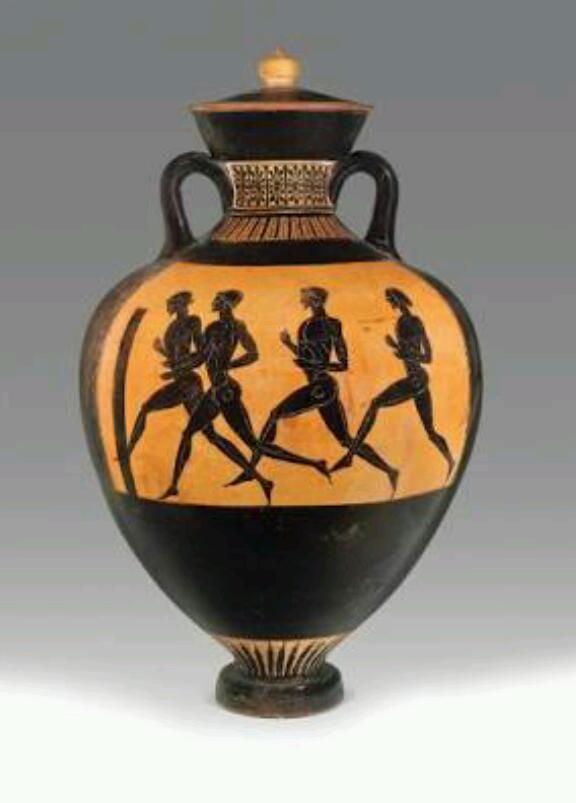
Ode On A Grecian Urn

Ode On A Grecian Urn
Written by John Keats 

Poem


Thou still unravish'd bride of quietness,

Thou foster-childof silence and slow time,
Sylvan historian, who canst thus express
A flowery tale more sweetly than our rhyme:
What leaf-fring'd legend haunt about thy shape
Of deities or mortals, or of both,
In Tempe or the dales of Arcady?
What men or gods are these?What maidens loth?
What mad pursuit?What struggle to escape?What pipes and timbrels?What wild ecstasy?

Heard melodies are sweet, but those unheard

Are sweeter: therefore, ye soft pipes, play on;
Not to the sensual ear, but, more endear'd,
Pipe to the spirit ditties of no tone:
Fair youth, beneath the trees, thou canst not leave
Thy song, nor ever can those trees be bare;
Bold lover, never, never canst thou kiss,
Though winning near the goal-yet, do not grieve;
She cannot fade, though thou hast not thy bliss,
For ever wilt thou love, and she be fair!

Ah, happy, happy  boughs!  that  cannot shed

Your  leaves, nor  ever  bid the  spring  adieu;
And, happy  melodist, unwearied,
For ever  piping  songs for  ever  new;
More  happy  love!  more  happy, happy  love!
Forever  warm  and still  to be  enjoy'd,
Forever  panting, and for  ever  young;
All  breathing  human passion far  above, That  leaves  a  heart  highsorrowful  and clo y'd,
A burning  forehead,  and a  parching  tongue.

Who are  these  coming  to  the  sacrifice? To what  green altar, O  mysterious priest, Lead'st  thou that  heifer  lowing  at  the skies,

And all  her  silken flanks with garlands drest?
What  little  t own by  river  or  sea  shore, Or  mountainbuilt  with peaceful  citadel,
Is  emptied of  this folk, this pious morn? And, little  town, thy  streets for  evermore Will  silent  be;  and not  a  soul  to tell
Why thou  art  desolate, can e'er return.

O Attic  shape! Fair  attitude!  with brede

Of  marble  men  and maidens overwrought,
With forest  branches and  the  trodden weed;
Thou, silent  form, dost  tease  us out  of  thought
As doth eternity: Cold Pastoral!
When old age  shall  this ge neration waste, Thou shalt  remain, in midst  of  other  woe Than ours, a  friend to  man, to whom  thou say'st,
"Beauty  is truth, truth beauty,"that  is all
Ye  know  on earth, and all  ye  need to know.

About the poet :
John Keats (31 October 1795 – 23 February 1821) was an English Romantic poet. He was one of the main figures of the second generation of poets, despite his works having been in publication for only four years before his death aged 25 in the year 1821.he had become one of the most beloved of all English poets. The poetry of Keats is characterised by sensual imagery, most notably in the series of odes.

Introduction:

 In Ode  on  a Grecian  Urn, Keats  addresses  the  titular  urn,  “the  bride  of  quietness’,  whose beauty  and  purity  cannot  be  violated  by  time. Taking  us  to  the  enchanting  and  mysterious scenes of  Greek pastoral life engraved on the urn, he  exalts  on  how art  confers  permanence  on  beauty. Generations  will  pass,  but  the  urn  will  remain,  whispering  this  eternal  truth,  consoling  and inspiring  humanity.

Ode

It is a kind of poem devoted to a particular subject or a praise of a person, animal, or thing. It is written in varied or irregular metre with an elevated style and often expresses deep feeling or thought of the poet.

Summary of the first stanza:
The poet stands before an ancient Grecian urn and addresses it.  He is preoccupied with its depiction of pictures frozen in time.  He expresseshis sense of wonder through a string of questions. Keats calls the beautiful urn the“still unravish’ed bride of quietness”, the “foster childof silence and slow time”. He also calls it “sylvan historian”because the pictures on the urn are able to tell their stories more beautifully than any poet can.It tells the tales of gods and men inTempe or the valleys of Arcadia in Greece.  He wonders about the figures on the side of the urn and asks what legend they depict and from where they come.  He looks at the picture that seems to depict a group of men pursuing a group of women and wonders what their story could be: “What mad pursuit? What struggle to escape? What pipes and timbrels? What wild ecstasy?

Summary of the second stanza;

The poet looks at another picture on the urn, this time of a young man playing a pipe, The poet feels that heard melodies are sweet but those unheard are sweeter.  This means that imagination is more powerful than reality.  The piper on the urn will go on playing on the pipe forever because art has immortalised him.  His tunes are meant for the spiritual ear. Then he sees a fair youth beneath a glade of trees with his lover. Keats consoles the bold lover who is about to kiss his sweet heart saying that he should not grieve because her beauty will never fade  and she will be young forever.

Summary of the third stanza :

The poet looks at the trees surrounding the lovers and feels happy that they will never shed their leaves. The trees can never bid farewell to spring because eternal spring will keep them happy forever. The piper will go on piping ever fresh melodies without feeling weariness. The lovers on the urn will keep on loving.  The passions experienced by the lovers in the pictures are above real human emotions.  Human passions end up in sad satiety whereas the love depicted on the urn will remain fresh and young forever.

Summary of the fourth stanza :

The poet now turns to a scene of a ritual, an animal sacrifice on a pagan altar.  A heifer being led by a priest to the altar is lowing at the skies. He wonders where they are going and from where they have come.  He imagines the empty streets of their little town.All the people have gone to the sacrifice.  The streets of the town will be silent and desolate forever, for those who have left it, frozen on the urn, will never return.

Summary of the last stanza :

The poet again addresses the urn itself.  The urn is Greek and looks beautiful.  The marble urn is embroidered with human figures, branches and grass.  He says that the urn diverts us away from rational speculation and it does not yield to thought. Like eternity it too cannot becomprehended in rational terms.  He thinks that when his generation is long dead, the urn will remain, telling future generations its enigmatic lesson. “Beauty is truth, truth beauty.”  This is the great message of the urn to mankind.

Theme

1. Time
2. Art
3. Experience 
4. Love
5. Mortality and immortality 

Answer the following in two or three sentences.

1.Why does the poet address the urn as the “foster child of silence and slow time”?
The urn is the “foster child of silence and slow time” because Time ,which is actually a destroyer,but here it, kept the urn safe and preseved the urn for a long time without any damage. That is why it is called time's foster child.

2.How has the urn become a “Sylvan historian”?

The urn is addressed as Sylvan historian because the scenes engraved on it are of Greek rustic life.

3. “Heard  melodies  are  sweet,  but  those unheard  are  sweeter”.    Explain .

In these lines Keats means  that imagination is more  powerful  than  reality. Through the  melodies  of reality  are  sweet  but those  which  remain in imagination are sweeter.

4. How are the persons  and  nature  engraved  on  the  urn  superior  to  their  counterparts  in  reality?

The  persons  and  nature  engraved  on  the  urn  are  superior  to  their  counterparts  in  reality  for  art  has bestowed  immortality  on  them.    The  piper  will  go  on  piping  ever  fresh  melodies the  trees  will ever  be  green  and  the  lovers  will  keep  on  loving  and  ever  be  young  and  fair. But  in  reality  this  is not  possible.

5. How is the passion  experienced  by the  lovers  in  the  picture  different  from  real  human  passion?

The  passions  experienced  by  the  lovers  in  the  pictures  are  far  above  real  human  emotions. Human passions,  in  reality,  may  end  up  either  in  satiety  and  disgust,  or  in  intense  sorrow  whereas the  love  depicted  on  the  urn  will  remain  fresh  and  young  forever.

6. Can  you see the streets of  the  deserted  town  in  the  picture?  Where  do  they exist?

We cannot  see  the  streets  of  the  deserted  town  in  the  picture.   Looking  at  the  picture  of  a  sacrifice on  the  urn,  the  poet  only imagines  the  empty streets  of  the  deserted  town.

7. How does  the  Gre cian  urn  affect  our thoughts?

The urn  confuses  our  thought  like  a  riddle.

 8. What does the urn  symbolise?

The urn  symbolises  immortality  and  eternal  beauty.

9. What contradictions  are  merged  in  the urn?

The  inner  contents  of the urn  is mortal  remainings of  a  human  being.    But  the  pictures  engraved on  its  outer  surface  symbolise  the  immortality  and  permanence  of  art.    These  are  the contradictions  merged  in  the  urn.

10. What message does  the urn  convey to  humanity?

The Urn conveys a great message to humanity is that ‘Beauty  is  truth,  truth  beauty”

Answer in a paragraph of not  more than 100  words 

1. Comment  on the  three  scenes engraved on the  urn.  How  do they  appeal  to the  poet?
 The  first  scene  that he  encounters  on  the  urn  is  that  a  group  of  young  men  chasing  women and of some  musical  instruments. Looking  at  this  scene  he  wonders  about  the  figures  on the  urn  and  asks  what  legend  they  depict  and  from  where  they  come. 

The second scene is that of a young man playing a pipe, The poet feels that heard melodies are sweet but those unheard are sweeter.  This means that imagination is more powerful than reality.  The piper on the urn will go on playing on the pipe forever. Then he sees a fair youth beneath a a trees with his lover. Keats consoles the bold lover who is about to kiss his sweet heart saying that he should not grieve because her beauty will never fade  and she will be young forever.


The third scene  on  the  urn that  of  a  sacrifice  and  an  assemblage  of  men and  women.    The  poet’s  imagination  goes  beyond  the  actual  scene  represented  on  the  urn. He  imagines  how  the  town  from  which  the  people  have come  to  attend  the  sacrifice,  must be  forever  in  desolation.    All  these  three  pictures  on  the  urn  bring  out  the  immortality  and permanence  of  art.


2. How  does  Keats  brings  out lover  and his the  contrast  between  art  and  life through  the  picture  of  the  bold sweetheart?
 Keats  looks  at  the  picture  of  the  bold  lover  and  his  sweetheart  engraved  on  the  urn.  The lover  is  about  to  kiss  his  sweetheart.    Even  though  he  cannot  kiss  his  lover,  the  poet  says that  he  should  not  grieve  because  her  beauty  will  never  fade and  she  will  be  young  forever. The  bold  lover  who  is  about  to  kiss  his  sweetheart  reminds  Keats  of  the  transience  of human  life  and  the  permanence  of  art.    The  passions  experienced  by  the  lovers  in  the pictures  are  above  real  human  emotions.    Human  passions,  in  reality,  may  end  up  either  in satiety  and  disgust,  or  in  intense  sorrow.    Keats  contrasts  the  transience  of  human  joy  with the  permanence  of  art.

3. Comment on the words and phrases by keats celebrates the urn as the symbol of enternity?

In "Ode on a Grecian Urn," Keats finds eternity in the beauty of art. The phrase "beauty is truth,truth beauty" they are both identical. Art immortalizes beauty and here beaty is truth. The images carved upon the urn, is of ancient life have been given immortality. This immortality, however, is not entirely a blessing. Describing a picture of two lovers, Keats strikes a balance between the positive and negative aspects of eternal existence
In one way, they are perpetually young and love never knowing any sorrow. On the other hand, they cannot kiss, to fulfill the promise of their lives. Knowing no sorrow, the lovers' joy is ultimately meaningless, for happiness can only be experienced in contrast to suffering. Recognizing this fact, Keats shows how man's impossible quest for immortality manifests itself in art. Seeking to achieve permanence, we create images that will carry on through time. These images must ultimately fall short of the real world. Though art may surpass man chronologically, it never actually lives, and hence can only mimic the true essence of human existence.
4. "Beauty is truth, truth beauty',that is all /ye know on earth, and all ye need to know" Explain ?
Beauty is truth, truth beauty": the circular form of the aphorism recalls the pattern of Keats's reasonings but now this circularity has a restrictive value. The equation is valid only within the limits of the imaginary world of art. That is why the aphorism is qualified by a fresh restriction: "that is all / Ye know on earth." This clause would of course be meaningless if Keats had regarded the urn's message as a final lightening of "the burthen of the mystery." "All / Ye know" refers back to lines the poet tried to reach truth through beauty, and was led, in the attempt, to confess the incapacity of thought to discover the meaning of life, its inability to conceive a satisfactory connection between time and eternity. The only truth we may hope to reach on earth is that which is offered by the urn, the truth in beauty, the beauty which may yet be a substitute for truth. "All ye need to know"  But though beauty and art have kept their consolatory function, they no longer provide an answer to the mystery of life. What the urn expresses is rather the position of the "negative capability" letter: let us accept, since we must, the limitations of human knowledge. One of the ironies of literary fame is that the Ode should so often have been read as a manifesto of unqualified Aestheticism: for it does not say that beauty is the refuge of those who do not think, but the comfort of those whom thought has bruised.

5. Comment on the pictorial quality of keats poetry with reference to the 'Ode on the grecian urn '?

Keats is unique for his sensuousness and pictorial quality. The Ode on a Grecian Urn contains a series of sensuous pictures—passionate men and gods chasing reluctant maidens, the flute-players playing their ecstatic music, the fair youth trying to kiss his beloved, the happy branches of the tree enjoying an everlasting spring, a priest, who is seen leading a heifer to the sacrifice on some green altar, The town is painted as situated near the river at the foot of a hill and on top there is a fortress, etc all these imagined life is more real and made a physical embraces. The whole of the poem is a remarkable one for its pictorial effects.
Keats is more poet of sensuousness than a poet of contemplation. It is his senses which revealed him the beauty of things, the beauty of universe from the stars of the sky to the flowers of the wood. Keats's pictorial senses are not vague or suggestive but made definite with the wealth of artistic details. Every stanza, Every line is full with sensuous beauty. No other poet except Shakespeare could show such a mastery of language and felicity of sensuousness .    
Write an essay  of 300  words.
1. “Forever  will  thou  love,  and  she  be  fair”.    Discuss  the  central  theme  o with  reference  to  this  line.

Ode  on  a  Grecian  Urn is  one  of  the  most remarkable  poems  by  the  great  romantic, John Keats.  The  central  theme  of the poem is beautifully described in the line  “Forever will  thou  love,  and  she  be  fair” which conveys the transience of human life and the permanence of art. Keats  addresses  the urn whose  beauty  and  purity  cannot  be violated  by  time.    He  is preoccupied  with its  depiction  of  pictures  frozen  in  time.   It  is  the  “still  unravish’d  bride  of quietness”,  the  “fosterchild  of  silence and slow  time”.   He  also  describes  the  urn  as a  “historian” that  can  tell  a  story.    There is  a  series  of  pictures  engraved  on  the urn. series  of activities  among  which Keats focuses.
The scenes  depicted  are one,  a  festival, singers  and  young  men  chasing  shy maidens;  two,  an  amorous  scene  of courtship  with  a  youth  in a  gesture  of fulfillment;  and  the  last,  a  scene  of sacrifice  with  a  priest,  a  heifer  and people  in procession  to  an  imaginary altar. He  looks  at  the  picture  which seems to depict  a  group  of  men pursuing  a group  of women and  wonders  what  their story  could  be.
The  poet  then  looks  at  another  picture on  the  urn,  of  a young  man  playing  a pipe,  lying  with  his  lover  beneath  a glade of  trees. He  says  that  the  piper’s unheard melodies  are  sweeter  than  mortal melodies because they  are  unaffected  by time. The lover  is  about  to  kiss  his beloved.  
The  poet  tells  the  young  lover that, though  he  can  never  kiss his  lover because  he  is  frozen  in  time,  he  should not  grieve,  because  her beauty  will  never fade. The  lover  depicted  on  the  urn would  always  be  loving,  without  feeling the anguish  of love  of  real  life. The  piper on  the  urn  will  go  on  playing  on  the pipe  forever him.   His  tunes  are  meant for  the  spiritual ear.  The because art  has immortalised poet  looks  at  the  trees  on the urn  and  says  that they  will  never shed  their  leaves. The  trees  can  never bid farewell  to  spring  because  eternal spring will  keep  them  happy  forever. All  these pictures  bring  out  the  vital  difference between  life and  art.
Life has  the vividness and  warmth  of reality,  but  it  is subject to change  and decay, whereas  art is  the unchanging expression  of  beauty. The other  picture engraved  on  the  urn  is that of  a  sacrifice and  an  assemblage  of men and women.  A priest  is  leading  the heifer to  the sacrifice.
The  poet imagines how the  town  from which  the  people have come  to  attend the sacrifice must  be forever  in desolation. The fact  is  that the people  in  the  picture are bound  to  their place  and  thus  made immovable by art.
Keats concludes the  poem  by  conveying the  urn’s  message  to  mankind “Beauty  is truth, truth  beauty”.   Beauty  and  truth are not  two  different  things;  they  are identical.   Art  immortalizes beauty,  which in  its  turn,  consoles  man.

2. Trace the evolution of thought in the poem that leads to the conclusion that the urn will beat time and remain a friend to generations of humanity? 

The poem begins with the narrator's silencing the urn by describing it as the "bride of quietness", which allows him to speak for it using his own impressions. The urn is an external object capable of producing a story outside the time of its creation, and because of this ability the poet labels it a "sylvan historian" that tells its story through its beauty. The melody accompanying the pursuit is intensified in the second stanza. The unheard song never ages and the pipes are able to play forever, which leads the lovers, nature, and all involved to be immortal.
Then keat's focus is moving from the urn's ideal world and its joy and beauty to the ironic implications of the legend and the pain and truth of reality. And his next vision is not on the urn at all. Rather, it imaginatively extends the marble legend to include the unseen town from which the figures on the urn have come.
This lifeless and ultimately deceitful urn beat time and remain afriend to generations of humanity. The answer lies in what the urn says to man at the end of the poem.
Keats recognizes that the urn is an alluring thing of beauty. Its happy pastoral scene is rich and inviting so the urn is a friend to man because of its totality—not its beauty alone, but also its implicit truth that a human being cannot live by beauty alone and still develop a soul. The beauty-truth equation is not mathematically exact. It is an equation of completion. Beauty does not equal truth, but the one cannot exist on earth without the other. Where there is beauty, there is also truth; where there is warmth, there is also cold; where there is joy, there is also pain and sorrow. It is significant that the poet reverses the equation as well, and the repetition is not wasted. If beauty is truth, if joy requires pain, then so is truth beauty and so does pain require joy. The poem, therefore, does not end with equivocation or with mere longing after an unattainable ideal. The meaning of the beauty-truth equation goes much deeper. 
Ultimately, the urn's message is a validation of the miseries of human life and an assertion that these miseries are necessary for attaining what Keats called "Soul." The equation may not be all that man needs to know on earth, but, properly understood, it is a great deal, and perhaps all that is necessary to make inevitable the process of Soul-making.

ZLATEH THE GOAT

ZLATEH THE GOAT Issac Bashevis Singer Introduction Issac Bashevis Singer was a Polish-born Jewish writer in Yiddish. He won the Nobel Pr...